7 May 2025
PRP (Platelet-Rich Plasma) Explained: How It Works, What It's Used For and What the Evidence Says

Written by Dr Alexa Balan, GDC-registered dentist (GDC no. 293266)
Published · Updated
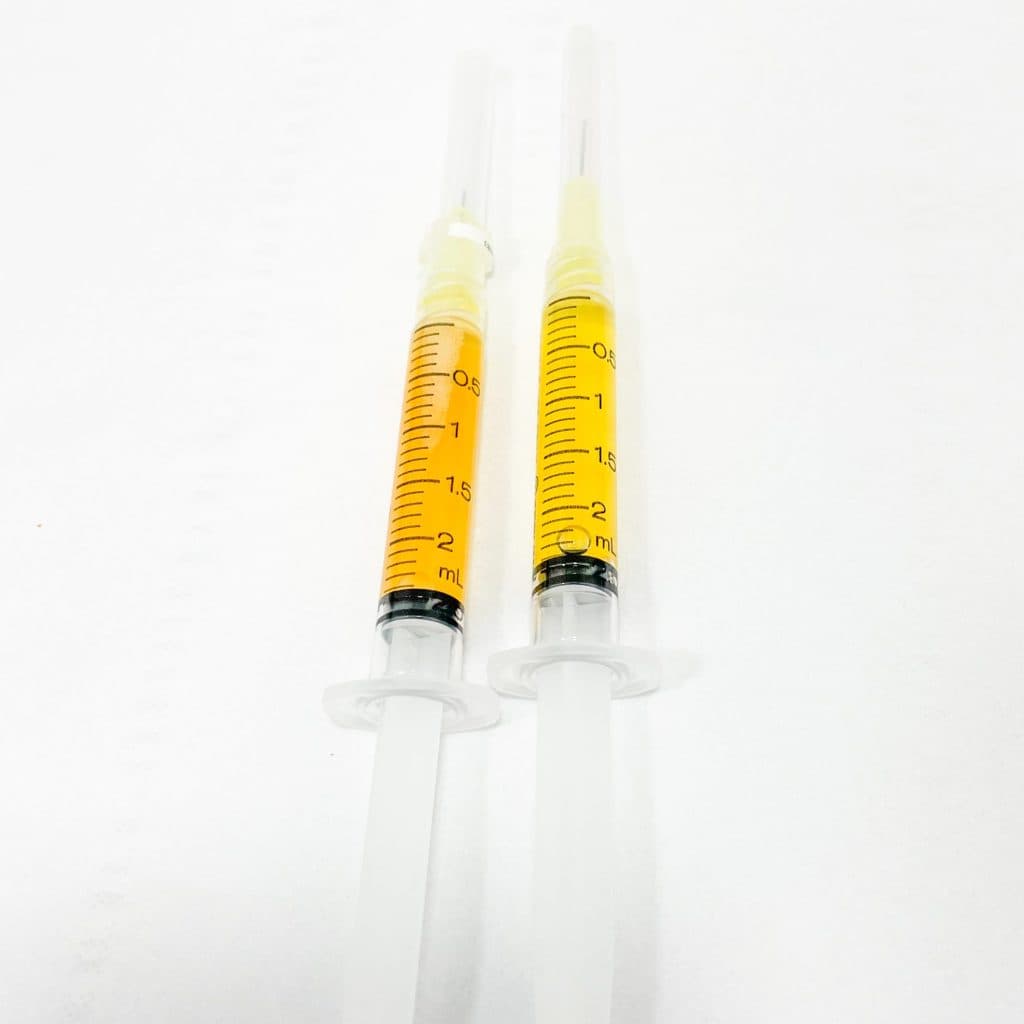
What is PRP (platelet-rich plasma)? How it's made, its uses for skin, under-eyes, hair and scars, PRP vs PRF, sessions, risks and the evidence.
Key takeaways
- It's made from your own blood, so there are no synthetic products and the risk of an allergic reaction is very low.
- It's gradual. PRP works with your body's repair processes, so results build over weeks to months.
- The evidence varies by use. It's good for hair loss, reasonable for acne scars, and more limited for general skin ageing.
- Results vary between people, and a course followed by maintenance is usually needed.
- It doesn't add volume or lift sagging skin.
This article is general information, not personal medical advice. Results vary and are not guaranteed.
About Dr Alexa Clinic and who wrote this guide
Dr Alexa Clinic is a doctor-led, CQC-registered aesthetics clinic at 44 South Molton Street, Mayfair (CQC location ID: 1-20415669683). Every treatment is carried out by a medically trained, registered healthcare professional in a clinical setting.
This guide was written by Dr Alexa Balan, a GDC-registered dentist (GDC no. 293266) with advanced training in regenerative and aesthetic medicine.
What is PRP, and how does it work?
Blood is made of red cells, white cells, platelets and plasma (the liquid part). Platelets are best known for helping blood clot, but they also release growth factors: signalling proteins that help the body repair tissue, form new blood vessels and make collagen.
How PRP is made:
- A small blood sample is taken from your arm, similar to a routine blood test.
- The sample is spun in a centrifuge, which separates it into layers.
- The platelet-rich layer is collected, giving a concentrate with several times more platelets than normal blood.
- The PRP is injected into the treatment area, or applied to the skin during microneedling.
The idea is that delivering concentrated growth factors exactly where they're needed encourages the tissue to repair and renew itself.
PRP vs PRF: what's the difference?
| PRP (platelet-rich plasma) | PRF (platelet-rich fibrin) | |
|---|---|---|
| How it's made | Spun faster, usually with an anticoagulant added to the tube | Spun more slowly, without an anticoagulant |
| Texture | Liquid | Forms a soft gel (fibrin matrix) shortly after preparation |
| Release of growth factors | Mostly released quickly | Released more gradually over several days |
| Contains | Concentrated platelets | Platelets, some white cells and fibrin |
| Evidence | More research overall | Newer; growing research, especially in dentistry and wound healing |
Both are made from your own blood and used in similar ways. Which suits you depends on the area and your goals, and we'll explain our approach at consultation.
What is PRP used for?
| Area or concern | How PRP is used | What the evidence says |
|---|---|---|
| Hair thinning (pattern hair loss) | Injected into the scalp | Good. Several meta-analyses show improved hair density, especially with more sessions at regular intervals |
| Acne scars | Combined with microneedling or laser | Reasonable. Studies suggest better results when PRP is added to microneedling or laser than with those treatments alone |
| Skin quality and fine lines | Microneedled into the skin or injected | Encouraging but limited. Small studies show improvements in texture, tone and elasticity |
| Under the eyes | Injected under the eyes | Limited. Small studies suggest improved texture and crepiness. It doesn't fill hollows |
| Other scars (e.g. surgical scars) | Injected or with microneedling | Limited. Mostly small studies |
| Neck, décolletage and hands | Injected or with microneedling | Limited. Used for texture and crepiness; little high-quality research |
What PRP doesn't do: it doesn't add volume, fill deep hollows or folds, lift sagging skin, or replace surgery.
*(Read more: Hair loss in women and men · C-section scars.)*
Who might consider PRP?
PRP may suit adults who:
- want a gradual, subtle improvement using their own blood;
- have early hair thinning, textured or scarred skin, fine lines or crepey skin under the eyes;
- prefer not to use synthetic products, or want to combine PRP with other skin treatments;
- are happy to have a course and wait for results.
Who should not have PRP?
You should not have PRP, or should delay it, if you:
- are pregnant or breastfeeding;
- are under 18. We do not treat anyone under 18;
- have a platelet or bleeding disorder, or take blood thinners (never stop prescribed medicines without medical advice);
- have low haemoglobin (anaemia), or a blood or bone marrow condition;
- have active cancer, or are having chemotherapy;
- have an active infection, cold sores or inflamed skin in the area;
- have a fever or feel unwell on the day;
- tend to form keloid scars, if microneedling is planned.
We'll go through your full medical history at consultation.
What happens during PRP treatment?
- Consultation: your goals, medical history and medicines, plus photographs for your private medical record.
- Blood sample: a small amount of blood is taken from your arm.
- Preparation: the sample is spun to separate the PRP, which takes about 10–15 minutes.
- Numbing: a numbing cream may be applied to the treatment area.
- Treatment: the PRP is injected, or applied during microneedling.
- Aftercare advice and booking your next session.
The appointment usually takes about 45–60 minutes.
Results: what to expect and when
| Time | What you may notice |
|---|---|
| First 24–48 hours | Redness, mild swelling or small bruises at injection points |
| 2–4 weeks | Skin may start to feel smoother and look fresher |
| After the course (about 3 months) | Gradual improvements in texture, tone or, for hair, less shedding |
| 6 months onwards | For hair, visible changes in density and thickness |
How many sessions, and how often?
| Typical plan | |
|---|---|
| Initial course | 3 sessions, about 4–6 weeks apart (sometimes up to 6 sessions) |
| Maintenance | Every 4–6 months for hair; every 6–12 months for skin |
| Appointment length | About 45–60 minutes |
| Downtime | Usually 24–48 hours of redness or swelling; bruising may last a few days |
For example (illustrative, not real patients):
- A 31-year-old with acne scarring has three sessions of PRP with microneedling, six weeks apart, then reviews the result at three months.
- A 44-year-old with crepey skin under the eyes has three sessions of under-eye PRP, four weeks apart, then maintenance once or twice a year.
- A 36-year-old man with early thinning at the crown has a course of scalp PRP alongside topical treatment, then maintenance every six months.
Side effects
Most are mild and short-lived:
- Common: redness, swelling, tenderness and pinpoint bleeding at injection points; mild bruising (more likely under the eyes).
- Occasional: a headache after scalp treatment; feeling light-headed during the blood draw.
- Rare: infection; temporary lumps.
Because PRP comes from your own blood, the risk of an allergic reaction to it is very low. Any numbing cream or other product used alongside it can still cause a reaction.
Aftercare
- Avoid make-up for about 12 hours, and avoid washing your hair for about 12–24 hours after scalp treatment.
- Avoid strenuous exercise, saunas, steam rooms and alcohol for 24 hours.
- Ask us before taking anti-inflammatory painkillers in the first few days, because they may affect how PRP works.
- Use daily SPF and keep up a good skincare routine.
- Contact us if you have increasing pain, swelling or any signs of infection.
Price at Dr Alexa Clinic
| Price | |
|---|---|
| Single session | £295 |
| Course of 3 | £745 |
| Course of 6 | £1,295 |
Your personal plan and cost are confirmed at consultation.
Frequently asked questions
What is PRP?
PRP (platelet-rich plasma) is a concentrate of platelets made from a small sample of your own blood. Platelets release growth factors that support healing and repair, so PRP is injected into the skin or scalp to encourage regeneration.
Does PRP work?
The evidence is strongest for pattern hair loss and, combined with microneedling or laser, for acne scars. For general skin rejuvenation and the under-eye area, results from small studies are encouraging but more limited. Results vary between people.
What is the difference between PRP and PRF?
Both are made from your own blood. PRF is spun more slowly without an anticoagulant, so it forms a gel that releases growth factors more gradually. PRP is a liquid that releases them more quickly.
Is PRP safe?
PRP is generally well tolerated. Because it comes from your own blood, the risk of allergic reaction is very low. Common side effects are temporary redness, swelling and bruising. It isn't suitable for everyone, so a medical consultation comes first.
How many PRP sessions do I need?
Usually 3 sessions about 4–6 weeks apart, sometimes up to 6, followed by maintenance every 4–12 months depending on the area.
When will I see results from PRP?
Skin may look fresher within a few weeks, with gradual improvement over about 3 months. For hair, changes usually take around 6 months.
Does PRP help dark circles under the eyes?
PRP may improve thin, crepey skin under the eyes, which can make the area look brighter. It doesn't fill hollows, and dark circles have many causes, so it won't suit everyone.
Does PRP hurt?
Most people find it tolerable. Numbing cream is used for the face, and the blood draw feels like a routine blood test.
How much does PRP cost at Dr Alexa Clinic?
PRP is £295 for a single session, £745 for a course of 3 or £1,295 for a course of 6.
Where can I get PRP in Mayfair?
At Dr Alexa Clinic, 44 South Molton Street, Mayfair, London W1K 5RT, a doctor-led, CQC-registered clinic near Bond Street station. Call 020 7846 6403.
Related Treatments
Getting advice
If you're wondering whether PRP could help your skin, hair or scars, a face-to-face consultation is the best place to start. We'll explain honestly what PRP is likely to achieve for you, and whether another option might suit you better.
Dr Alexa Clinic, 44 South Molton Street, Mayfair, London W1K 5RT. CQC-registered (location ID 1-20415669683). Dr Alexa Balan is a GDC-registered dentist (GDC no. 293266). All treatments are subject to consultation and suitability. Results vary and are not guaranteed. For adults aged 18 and over only.
Sources
- "Platelet-Rich Plasma Monotherapies for Androgenetic Alopecia: A Network Meta-Analysis and Meta-Regression Study." Journal of Drugs in Dermatology, 2022.
- Systematic reviews of PRP combined with microneedling or fractional laser for atrophic acne scars.
- Clinical studies of PRP for facial rejuvenation and infraorbital (under-eye) skin.